

Key Takeaways
- Customer experience is shaped by every interaction, from the first enquiry to well after the trip ends.
- Service consistency depends on strong internal coordination, clear ownership, and shared responsibility across teams.
- Mapping the customer journey helps identify gaps, strengthen systems, and improve how customers experience the service.
- Consistent follow-up and feedback help build long-term trust and keep WopeCar top of mind for future needs.
- In a mobility platform, partners deliver the service, but the brand remains responsible for the overall experience.
What We Thought Customer Experience Was, And What We Discovered Instead
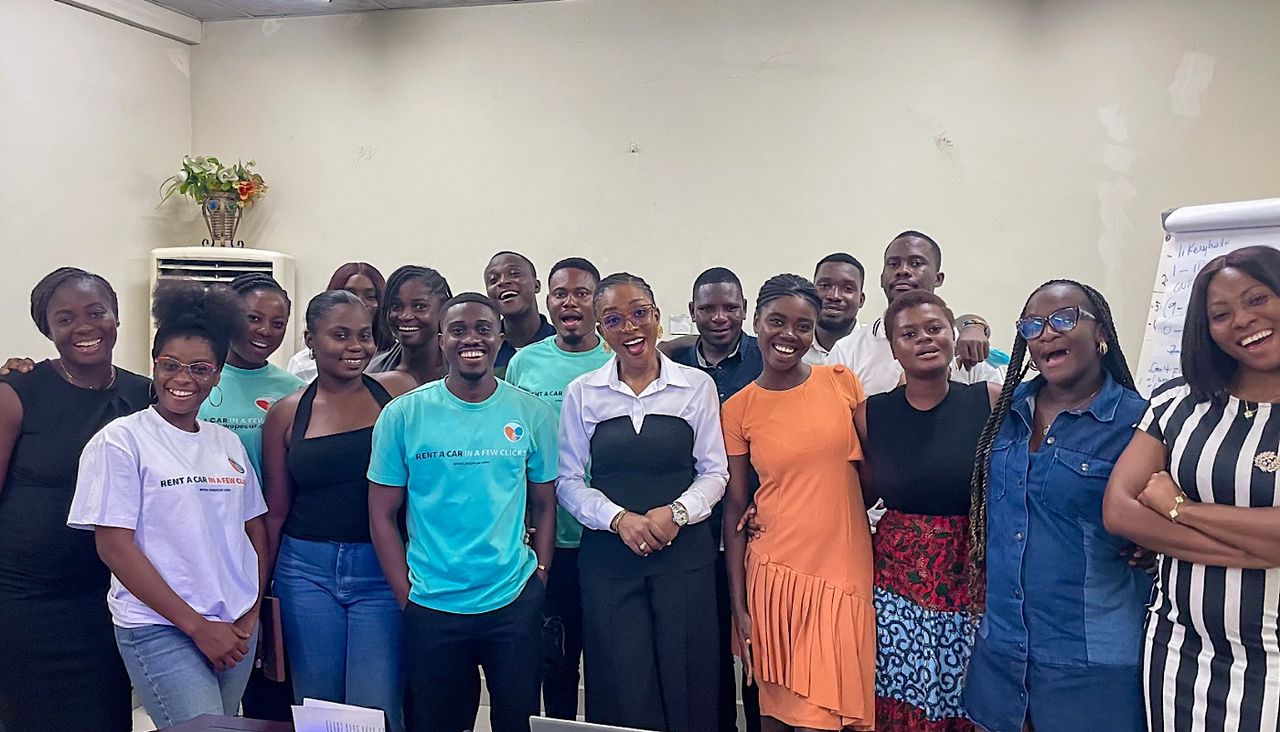
On Tuesday, February 10th, we stepped back to examine something that quietly shapes every client interaction: customer experience. For many people and organisations, mobility services can feel unpredictable: delays, miscommunication, or uncertainty about what to expect.
The session, facilitated by Amanda Akushie of Nilee Consult, challenged us to answer a simple but uncomfortable question: Why should anyone choose us, and not someone else?
It sounds obvious. Until you try to answer it honestly. Because customer experience isn’t just about delivering a service. It’s about what someone feels at every single point they encounter your brand, before, during, and even after they use it. And once you start seeing it that way, you realise it’s everywhere.
Mobility services often fail not because people don’t care, but because small gaps like delayed communication, unclear ownership, or internal assumptions quietly shape the customer journey. These are the moments customers remember. And strengthening them is what builds real customer satisfaction over time.

Customer Experience Is Not One Moment. It’s Every Moment.
One of the biggest shifts was understanding that customer experience is broader than customer support.
Customer support focuses on assisting customers when they have questions, need guidance, or require help at any stage of their interaction with us. Customer experience, on the other hand, encompasses the entire journey; how customers discover us, interact with our platform, receive the service, and how they feel throughout that relationship.
It’s the ease of booking a car online. It’s whether information moves quickly between teams. It’s whether the car arrives exactly as expected. It’s whether the customer feels confident, reassured, and respected throughout.
It’s also what happens internally. Because when internal systems are fragmented, customers experience the effects externally. Delays occur. Communication becomes unclear. Customers are left uncertain about what to expect, and confidence in the service begins to erode.
Customer experience rarely fails loudly. More often, it is shaped quietly through small gaps, assumptions, and moments of inconsistency.
Check Out Our Affordable Self-Drive Options!
Mapping the Customer Journey Changed Everything

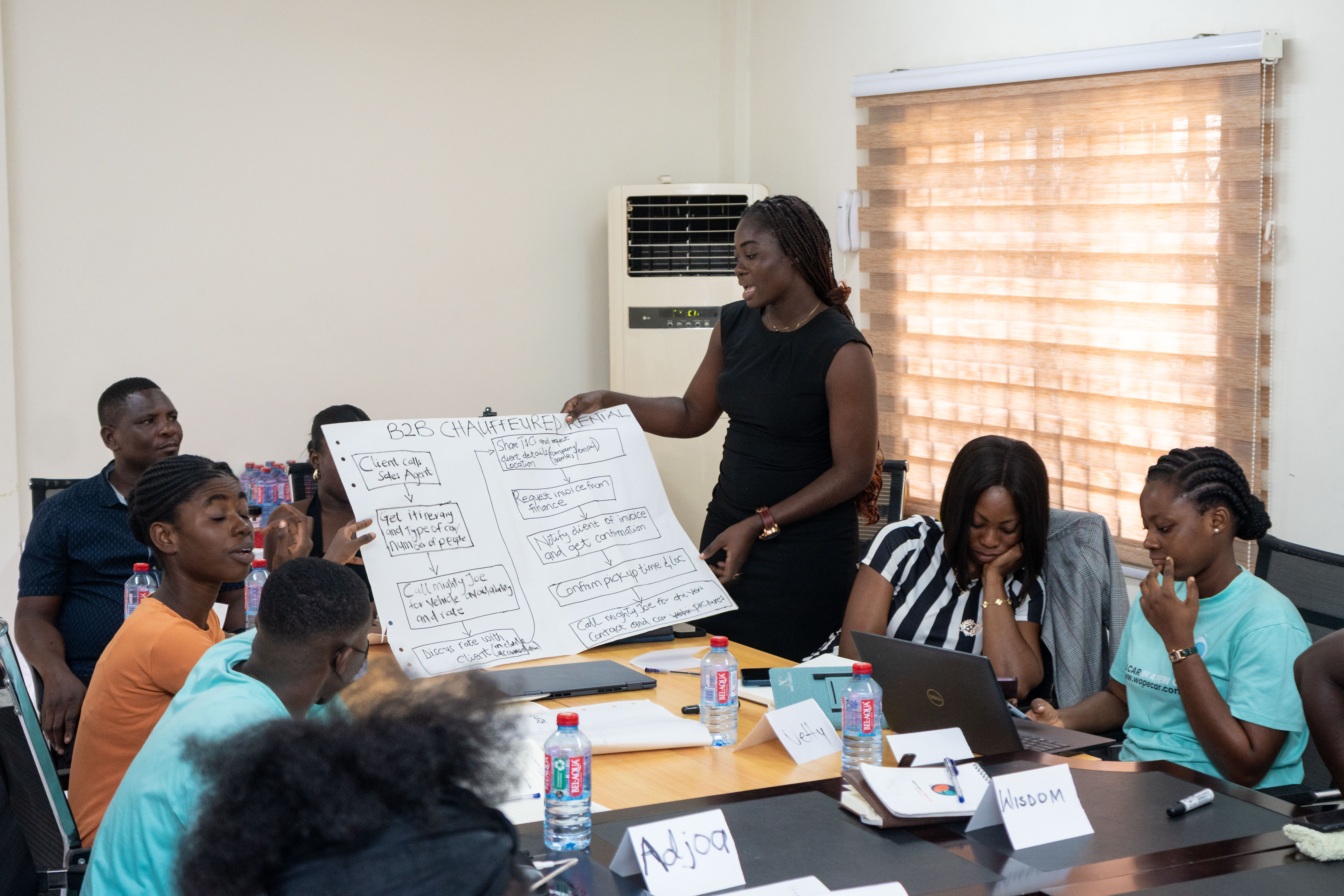
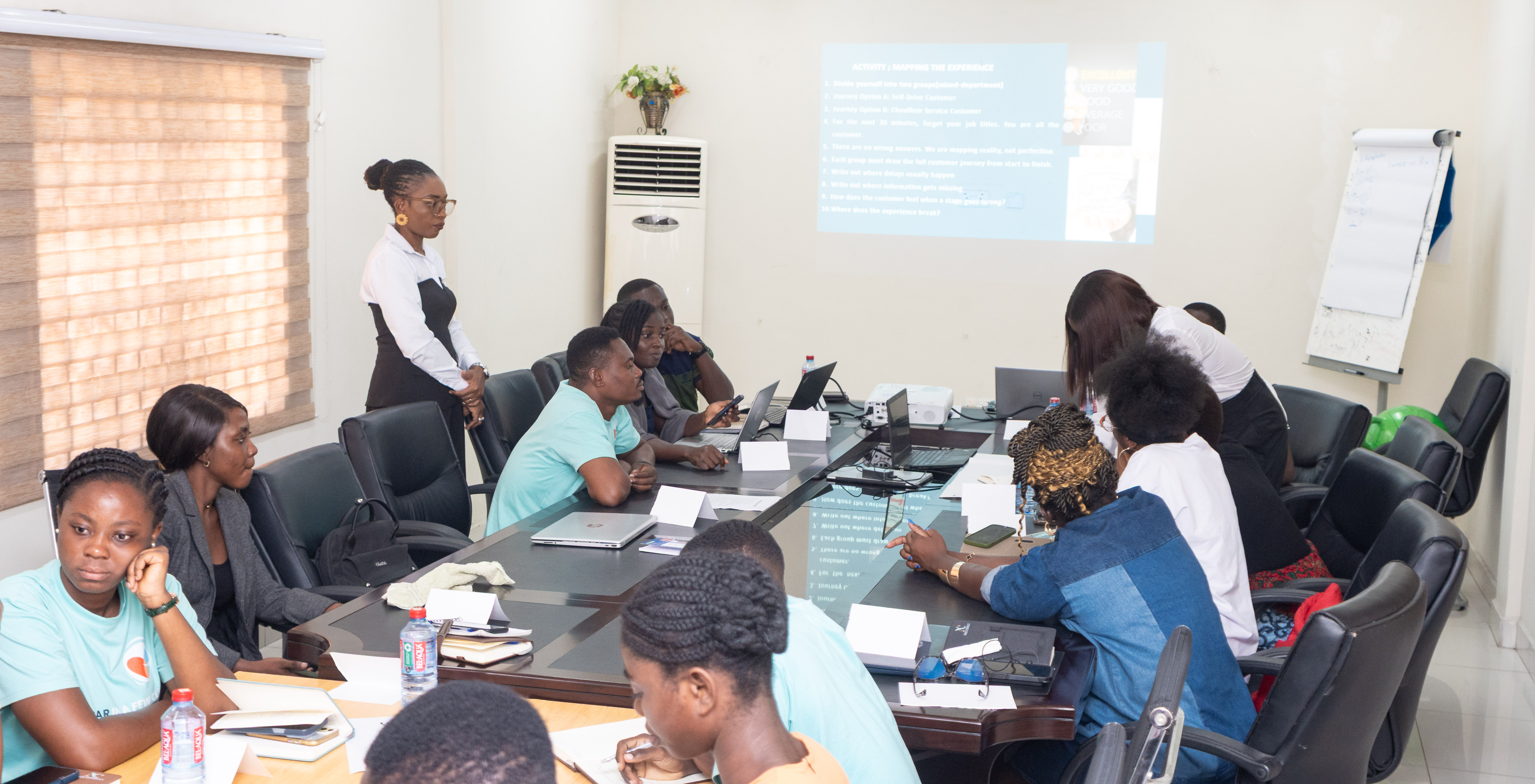
One of the most eye-opening parts of the session was mapping the full journey of a WopeCar customer: from the first booking to the final return.
We split into two groups:
- Self-drive customers
- Chauffeur service customers
Then we mapped every step of the journey. We examined how information flows, where delays might occur, where assumptions can form, and where the experience could become unclear. More importantly, we asked ourselves critical questions:
- What is the customer thinking at this stage?
- Do they feel confident and reassured, or uncertain and in need of clarity?
- Are we making the process easier for them, or unintentionally creating friction?
It became clear that customer experience is less about individual tasks and more about continuity.
Everyone may complete their role, but if the handover breaks, the experience breaks. And to the customer, there are no departments. There is only one brand.
Book Our Chauffeured Services Here
The Shift From “We Don’t Own the Car” to “We Own the Experience”
As a mobility platform, WopeCar operates within an aggregator model. We work with car owners, drivers, and partners across our network.
But customers don’t experience partners. They experience WopeCar. They don’t separate the platform from the vehicle. They don’t separate systems from outcomes. They remember how the experience made them feel. One line from the session stayed with us:
We may not own all the cars. But we own the promise.
That means consistency matters. Clarity matters. Ownership matters. Even in moments that happen behind the scenes.
Read Also: Why Digital Rights Matter: Lessons from Felicia Anthonio’s Training with WopeCar
Customer Experience Doesn’t End When the Trip Ends

Another shift was recognising that customer experience continues long after the service itself ends. While long-term corporate relationships often involve regular communication and ongoing coordination, individual customers may interact with the service less frequently. This makes intentional follow-up even more important.
Following up helps us understand how the experience felt from the customer’s perspective. Listening allows us to identify what worked well and where improvements can be made. Asking for feedback ensures that customers feel seen, not just served.
Silence does not always mean satisfaction. Sometimes it simply means the customer moved on quietly.
Customer experience is what keeps you top of mind, so that when the need arises again, the decision feels familiar and confident.
See Also: Exploring Storytelling as a Marketing Tool: What We’re Learning at WopeCar
What This Means For Our Customers
The session helped us see both the strengths in our systems and the areas we can strengthen further. It reinforced something we’ve always believed:
Customer experience is proactive. Not reactive.
It means thinking ahead. It means improving what customers see, and what they don’t see. It means ensuring consistency across every touchpoint. From the moment someone visits our website, to the moment their journey ends, and beyond.
What Happens Next?
March is almost here. And we’re stepping into it with renewed clarity.
We’re already implementing what we’ve learned; strengthening internal coordination, improving consistency, and refining how we deliver our service. Because customer experience isn’t a one-time effort. It’s a continuous practice. And it’s one built through attention, ownership, and intention.
We’re grateful to Amanda Akushie and Nilee Consult for guiding the session and helping us see our work from the perspective that matters most: Our customers!